Knowledge Article
The Data Workstream
Author
ryan_cutter
SailPoint
The data workstream is a critical component of identity governance, focusing on the collection, analysis, and management of data to drive insights and informed decision-making. This process is essential for ensuring that access is appropriate, risks are mitigated, and identity governance evolves alongside organizational needs.
In this article, we’ll explore how to build a comprehensive data workstream, leveraging SailPoint’s capabilities to optimize access models, integrate unstructured data, and maintain data integrity.
Introduction to the Data Workstream
The data workstream is centered on harnessing the power of data within the SailPoint platform to:
- Collect and analyze data: Gather information from various sources to understand access patterns and behaviors.
- Drive informed decisions: Use insights derived from data to make strategic decisions regarding identity governance.
- Enhance security measures: Identify anomalies and potential risks through data analysis to strengthen security posture.
Step 1: Utilize autonomous data intelligence
Once data enters the SailPoint platform, the autonomous data intelligence engine begins its work with minimal configuration. It starts analyzing access patterns, forming recommendations, and detecting outliers. As more data is ingested—whether from additional sources or through processes like access requests and reviews—the platform evolves its insights and provides updated recommendations to users within your organization.
Best practice:
- Leverage automated analysis: Take advantage of SailPoint's autonomous data intelligence to automatically analyze access data without extensive manual configuration.
- Monitor evolving insights: Regularly review the insights and recommendations provided by the platform as it processes more data.
- Incorporate findings into governance: Use the generated insights to inform policies, access controls, and governance strategies.
By allowing the platform to autonomously process data, organizations can quickly identify unusual access patterns, potential security threats, and areas for improvement in their identity governance framework.
Step 2: Automate access descriptions with generative AI
As in-depth access models are developed within SailPoint, organizations can utilize generative AI functionality to automatically generate descriptions of access rights.
Best practice:
- Automate access descriptions: Use generative AI to create detailed descriptions of access permissions and roles.
- Simplify access reviews: Providing clear and concise access descriptions makes it easier for managers or auditors to assess and approve or deny access requests, streamlining the access review process.
- Enhance access requests: Improving the clarity of access options available to users during the request process helps users make more informed requests and improve overall identity governance transparency.
Step 3: Leverage AI and peer group analysis for dynamic access models
AI models, when combined with peer group analysis, offer a dynamic and context-aware approach to managing access controls. This technique allows organizations to create more precise access models and role-based access controls (RBAC).
Best practice:
- Analyze user behavior patterns: Utilize AI algorithms to identify patterns in user behavior and access needs across the organization.
- Benchmark access levels: Use peer group analysis to compare access permissions among similar roles or departments.
- Align with least privilege principles: Ensure that access rights are appropriate and adhere to the principle of least privilege, minimizing unnecessary permissions.
By combining AI insights with peer comparisons, organizations can create dynamic and context-aware access models that evolve with changing business requirements.
Step 4: Integrate access models with unstructured data
Connecting access models to unstructured data is essential for gaining visibility into who has access to various files and enhancing data security.
Best practice:
- Map user permissions: Systematically link user identities and access models to unstructured data repositories such as documents, emails, and multimedia files.
- Monitor access rights: Precisely monitor and audit who has access to specific files and folders to identify unauthorized access or vulnerabilities.
- Implement security measures: Employ encryption, data loss prevention strategies, and regular audits to protect sensitive unstructured data from breaches and misuse.
This integration provides critical visibility into data access and strengthens the organization's ability to safeguard valuable information.
Step 5: Prioritize data cleanup for enhanced identity governance
Data cleanup is a valuable opportunity to improve identity governance by ensuring that user information is accurate, up-to-date, and consistent across systems.
Best practice:
- Integrate data cleanup processes: Embed data cleansing activities within your identity governance framework to maintain data quality.
- Feedback to upstream sources: Feed insights and corrections back to authoritative sources like HR systems or directory services to ensure foundational data remains reliable.
- Update downstream systems: Push cleansed data to downstream applications such as access management platforms or CRM tools to correct inconsistencies.
- Promote data stewardship: Foster a culture of data responsibility within the organization to maintain high standards of data integrity.
Effective data cleanup reduces risks associated with outdated or incorrect information and enhances operational efficiency in identity management.
Step 6: Enhance decision-making with comprehensive data analysis
Utilize the insights gained from data analysis to drive strategic decisions in identity governance.
Best practice:
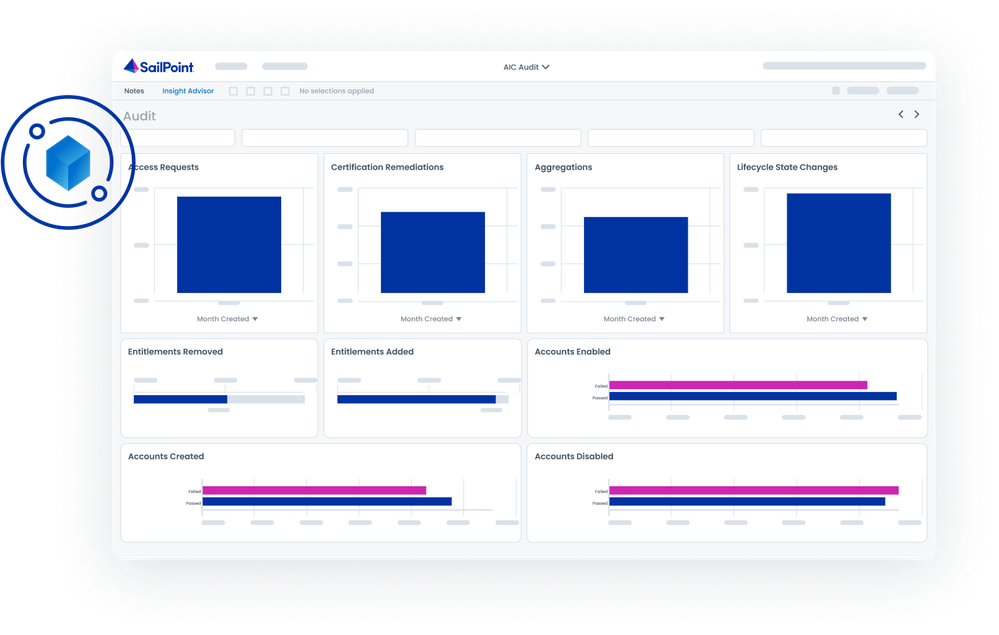
- Regularly review analytics: Continuously monitor analytics dashboards and reports provided by SailPoint to stay informed about access trends and potential issues.
- Identify and mitigate risks: Use data insights to proactively address security threats and compliance gaps.
- Inform policy development: Base your identity governance policies on empirical data to ensure they are effective and relevant.
Data-driven decision-making leads to a more secure, efficient, and adaptable identity management strategy.
In a nutshell
Optimizing the data workstream within SailPoint's identity governance platform empowers organizations to make informed decisions, enhance security, and improve operational efficiency. By following these best practices, SailPoint customers can:
- Leverage autonomous intelligence: Utilize built-in AI capabilities for automated analysis and recommendations.
- Streamline access management: Use generative AI to simplify access descriptions and processes.
- Implement dynamic access controls: Combine AI with peer group analysis for adaptive access models.
- Secure unstructured data: Integrate access models with unstructured data repositories for comprehensive visibility.
- Maintain data integrity: Prioritize data cleanup to ensure accurate and reliable identity information.
- Drive strategic decisions: Use data insights to inform and enhance identity governance policies and practices.
Final recommendations:
Embrace the power of data within your identity governance framework. Regularly update and refine your data strategies to keep pace with technological advancements and evolving security landscapes. Collaborate with SailPoint's support and professional services to maximize the benefits of the data workstream and achieve your organization's identity management goals.